erc

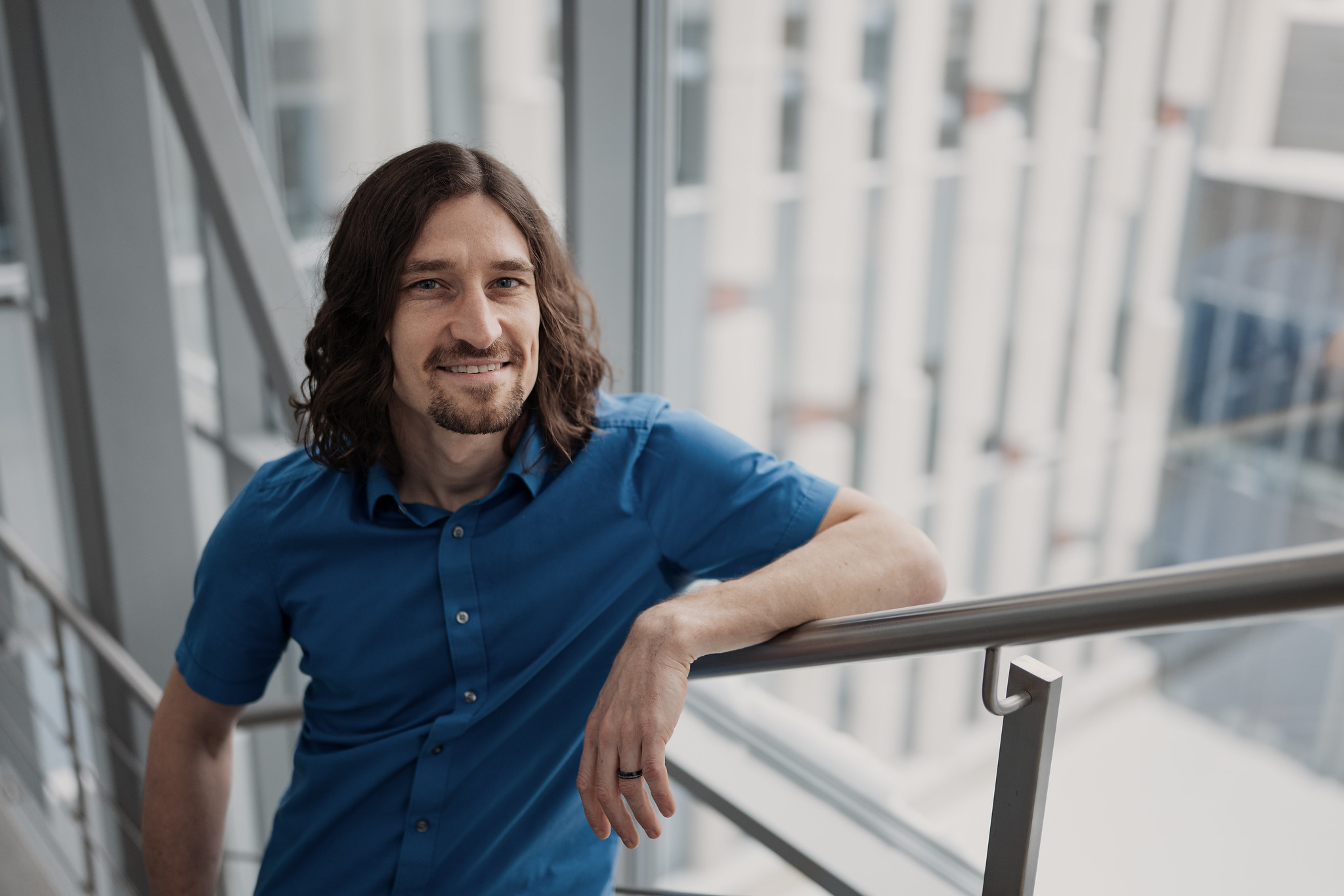
  • ERC Starting Grantee Dr Stephen Jones: "Applying for grants takes time and effort, but it's worth it"
    52619672840 66b97899f7 kAlthough different grant cycles vary, in general, the process of applying for grants takes time. According to 2022 European Research Council (ERC) Starting grant winner Dr Stephen Knox Jones Jr, a biochemist at Vilnius University (VU) Life Sciences Center (LSC), it was six months before the application deadline when he started putting words on paper. However, the intellectual work began much earlier. Apart from timing, the researcher shares what other factors are essential in applying for grants.

    Receiving a grant as outside validation


    "If you want to make a big impact, you need the money to do it. That means applying for grants, which is not an easy process. It takes time. It takes effort. It takes a lot of planning. Getting this grant affirms that these efforts were worthwhile," – says Dr Jones, last year receiving the ERC Starting grant of 1.2 million Euros.


    It is not the first grant of this size that he applied for in his life. Before leaving his home country, the USA, Dr Jones applied for another grant he barely missed: “Many people would have said it was a huge waste of my time. However, everything I learnt in that process, I applied here. So indirectly, not getting the first grant helped me achieve another this time around. That is why I suggest thinking with a ‘long-term’ perspective.”
    Dr Stephen Jones earned his PhD degree from Brown University (Providence, RI, USA) and later joined Ilya Finkelstein's lab as a postdoc at the University of Texas (Austin, TX, USA). In 2021 he came to VU LSC’s new EMBL Partnership Institute to establish The Jones Laboratory; his team researches and develops novel genome editing tools. For the leader of the Jones!Lab, this was his last and only opportunity to apply for the ERC Starting grant, which is explicitly directed towards new research team leaders with less than seven years since receiving their PhD.


    "When you are still quite a young researcher and new to leading a team, it's helpful to have outside validation. You feel a lot of doubt in general, so having other people say you are doing it right is beneficial. Getting the grant is reassuring and motivating. The idea of funding put a lot of pressure on me, but I can breathe a little now," – says the ERC grantee.


    Getting as much criticism as possible


    Concerning the application timeline, the most important date is the submission deadline. Yet, there are several steps before the applicant gets a final answer almost a year later.
    "I started working on it in the summer of 2021, basically six months before submitting. However, that doesn't mean I hadn't been intellectually working on it before. But this was when I started first putting words on paper," – claims the leader of the Jones!lab.


    According to him, if you want to succeed with these things, you best get as much criticism as you can, as early as you can: "After writing the application, you need feedback from your peers. It’s tough if you haven't learned how to handle criticism. However, it is better to receive feedback from your colleagues when you can still make changes, than from the ERC committee when you can’t do a thing about it. So if an expert you trust says that your idea needs work or isn’t good enough, it is good to know – you can prepare another one instead."


    He suggests that sharing ideas with other people can get you an outside perspective and assure that you are communicating your ideas effectively, helping you develop your ideas further. Of course, it takes time. That is why Dr Jones planned time to build his concept twice. This is a good strategy, as one gets valuable feedback the first time around, enabling a better product the next time. The main goal is to get that information.


    "The minimum you need in this process is two people: yourself and a representative from a European university committed to hosting you. But the more people involved, the better. I had everyone from my institute and other close colleagues viewing my work, even people doing similar work in other parts of the world. And, of course, I lined up a team of experts tangential to my project. I asked if they could provide support if needed. So, a more realistic number would be 10 to 20 people," – tells the researcher.


    Convincing different audiences


    "After submitting the application in January, I didn't hear anything until the summer. Only then I received the first answer. In my case, they sent a positive letter, but I still had to wait for the interview in the fall."


    During the interview in September, Dr S. Jones had to present his project in just ten minutes, before answering his panel’s questions: "Here you have all these questions and comments from experts, and from other reviewers who are not experts in your field. It's worth realizing – this is a very broad audience. So, before the interview, I presented my work to people from all different levels of expertise to get feedback: from the top people in my field, those who are experts in other fields, students that just joined my lab, to people who have never heard of CRISPR".


    According to him, if you can explain your project to anyone, you truly know your thing. Finally, only in November did the researcher discover he had succeeded.


    Convince yourself and use the previous examples


    "The crucial thing during the process is trusting that you can do it. But you can't always get that from yourself, so you need a support structure telling you you’re worth it. It gives you the energy you need because it will be difficult," – assures the researcher.


    Since there is also a lot of planning and thinking involved, your support team – family, friends, colleagues – will help you make it through the whole process. Even so, one has to believe in himself (herself) too, because if you haven't convinced yourself, you are going to have a hard time convincing anybody else.


    "From a more practical perspective, I would advise: don't reinvent the wheel. Many others have made it through this process, so you need to get information from someone like me who has received the grant, or maybe from another colleague who has reviewed that type of application. The people from the research project division also help by sharing examples of prior ERC grants that have been funded and the information on everything you should know," – says Dr S. Jones.


    Last but not least, the applicant has to be ambitious: "You want to make sure that whatever you are proposing has a lot of potential for the community. If it can make a big impact, it opens you up to bring in some risk. People should see that the stuff that I do is worth doing".


    In 2022 Dr S. Jones and his team received a €1.2 million grant from the ERC. Spanning the next five years, the researcher will lead a project which aims to improve gene editing techniques.

  • Investigating the Sugars of the Brain: Prof. Neniškytė Awarded €2M ERC Grant

    Prof. U. Neniskyte


    Neuroscientist Prof. Urtė Neniškytė from Vilnius University Life Sciences Center (VU LSC) has secured the full €2 million available through the European Research Council (ERC) Consolidator Grant scheme for her research project ‘Sugars Maketh the Brain: Investigating the Role of Neuronal Glycocalyx in Shaping the Architecture of Emerging Circuits (GlycoCirc)’. The project will explore how sugar structures known as glycocalyx, which are found on the surface of brain cells, contribute to the formation of neural networks, influence brain development, and may help explain what makes the human brain unique.

    The overlooked sugar coating the brain


    ‘The GlycoCirc project looks at the sugary surface molecules, trying to understand how they guide synapse formation between neurons and how they mediate interaction between neurons and other brain cells, such as microglia or astrocytes. These molecules, known as glycocalyx, form a sugar-rich layer on the cell surface. They were largely neglected in neuroscience for decades,’ says Prof. Neniškytė.


    According to her, these molecules resemble tiny ‘sugar trees’ covering the surface of brain cells. On neurons, the glycocalyx can span up to a micrometre in thickness, forming a barrier and acting as the first point of contact between a neuron and its surroundings, whether that’s another neuron or a nearby glial cell.


    The Professor believes this layer plays a vital role in early brain development: ‘I strongly believe that the glycocalyx-mediated interactions are critical when new synapses are being established or when unnecessary synapses are being pruned in the developing brain, and I would like to look at this in more detail.’


    A human signature written in sugar


    She points out that the glycocalyx might hold clues to what makes human brains special: ‘If we look at the composition of our glycocalyx, it is important to note that it is unique to humans. We can detect differences even when compared with the closest of our relatives, bonobo chimps. Interestingly, the emergence of these human-specific genetic modifications coincides with the time when we see the accelerated development of the human brain, which indicates that these processes can be related to each other.’


    Now, with the ERC funding, Prof. Neniškytė’s team will be able to pursue further research on these ideas using a wide array of advanced methods.


    ‘I’m really excited now to take an in-depth look into these glycocalyx effects on neuronal networks, combining the techniques that span from neurophysiology-focused methods, such as recording and imaging neuronal activity, and combining it with biochemical approaches – understanding the composition of the glycocalyx and how it changes during the development, as well as how it differs between species. I believe that these insights can reveal the distinct features of the human brain and, overall, help us understand the uniqueness of humans as a species,’ states the neuroscientist.


    Stem cells and the brain


    To understand what makes the human brain unique, Prof. Neniškytė’s team uses a comparative approach based on induced pluripotent stem cells (iPSCs) derived from humans and non-human primates.


    The researcher explains that while conducting this type of research on living humans or non-human primates would be ethically unacceptable, iPSCs offer a powerful and sustainable alternative. These cells can be derived from minimally invasive sources such as skin biopsies or blood samples and then developed into various types of brain cells, including neurons, microglia, and astrocytes. This approach enables researchers to model complex cellular interactions in the lab, essentially creating miniature, brain-like systems from cells that regain the capacity to become any cell type in the body.


    Furthermore, iPSC technology could be used in the future to explore how the deficits in glycocalyx pathways contribute to neurological disorders. Prof. Neniškytė emphasises that most conditions related to disturbed glycocalyx turnover present with a pronounced neurological phenotype.


    ‘Sometimes patients have only mild peripheral symptoms, but they show severe neurodegeneration and neuroinflammation. My lab has already observed specific changes in the glycocalyx and its modulating enzymes in human epilepsy tissue. It seems that the composition of the glycocalyx defines neuronal excitability in both ways. For example, with some changes, you get epileptic bursts, while others don’t allow neurons to transmit signals effectively,’ says the neuroscientist.


    Advancing neurobiology through global collaboration and local excellence


    In addition to enabling new technologies, the ERC funding allows Prof. Neniškytė’s team to expand their expertise and attract top researchers from around the world. While it was not the case that these technologies were entirely out of reach in Lithuania, the primary limitations concerned access to advanced equipment and the availability of specialised knowledge.


    ‘The major qualitative impact on the research my group performs comes from the added value of the ERC grant. I hope it will help us to attract competent researchers who are the hands and the brains of the projects implemented in the lab,’ observes the ERC grantee.


    She is now working on attracting two strong postdoctoral fellows – one with experience in induced pluripotent stem cells biology and another with a strong background in multi-electrode arrays; this will enable her team to investigate the activity of neurons by conducting highly detailed analysis.


    The Professor sees long-term benefits in bringing such expertise to Vilnius: ‘Attracting early career researchers who were trained in the best centres in Europe or beyond, and harnessing their expertise effectively, will definitely be very important for the implementation of the project. In addition, it introduces new competences into the lab that can support other ongoing projects and further strengthen Vilnius University Life Sciences Center as a whole.’


  • Vilnius University Life Sciences Centre Secures an ERC Grant for Innovative Biotechnology Project

    Klimasauskas 1Vilnius University’s (VU) Life Sciences Centre (LSC) researcher, Professor Saulius Klimašauskas, has been awarded a European Research Council (ERC) Proof of Concept grant for his project Functional Cofactors for Targeted Modification of Biomolecules (CoMBi). The ERC will allocate a lump sum of €150,000 under this grant agreement.

    This ERC grant is awarded through a highly competitive process, open exclusively to researchers who have previously completed projects under one of the ERC's major funding schemes – a testament to exceptional scientific achievements. In 2017, Prof. Klimašauskas received the prestigious €2.5 million ERC Advanced Grant for experienced researchers, successfully completing a project focused on developing advanced epigenome research technologies.


    A Flexible Funding Scheme to Advance Biotechnology


    “The second ERC grant will allow us to extend our work towards practical application of our research results in both scientific and industrial contexts. Despite its smaller financial contribution, the flexible funding scheme will give us the opportunity to effectively combine research, technological development, and commercialization efforts, maximizing the impact and delivering value to both science and industry,” says Prof. Klimašauskas.


    One of the project’s goals is to produce SAM (S-adenosylmethionine) analogs suitable for targeted biomolecular modifications using methyltransferases. “Until now, these analogs have been chemically synthesized by us and a few other groups worldwide. However, the synthetic procedure is rather tedious and costly, yielding a mixture of compounds from which a functional isomer must be isolated,” explains Prof. Klimašauskas.


    “Our latest studies demonstrated that chemo-enzymatic synthesis can be much more efficient and selective. Enzymatic reactions occur under milder conditions and directly yield the functional cofactor isomer. The primary goal of the CoMBi project is to transition our laboratory protocol into a technological framework, to test its feasibility for industrial production.”


    Potential Applications in Cancer Diagnostics


    Epigenome profiling technologies developed and utilized by Prof. Klimašauskas’s team during the past decade show significant potential in cancer and other disease diagnostics. These technologies have proven instrumental for detailed characterization of genomic features and mechanisms associated with disease onset and progression. This paves the way to developing more reliable, sensitive and inexpensive analytical tools for early detection of disease in the clinic.


    However, a major hurdle lies in the poor availability of the reagents required for such studies. Currently, there are no commercial sources of the SAM analogs, grossly limiting further spread of these innovative technologies.


    “We are receiving increasing inquiries for these materials from academic groups and industry, underscoring the existing demand. If our trials prove successful, the next phase will involve finding an industrial partner who can adapt and commercialize it. This will address the current bottleneck: despite its high potential, this technology remains largely inaccessible due to the lack of necessary reagents,” notes Prof. Klimašauskas.


    The ERC Proof of Concept grant aims to support the initial steps in translating research results into commercial or societal applications. Prof. Klimašauskas’s research will not only contribute to the development of new biotechnological tools but also enhance VU and Lithuania’s position in the global scientific innovation landscape.

  • Vilnius University Scientist Prof. Urtė Neniškytė Receives Prestigious ERC Grant

    20250306 1Vilnius University Life Sciences Center's Institute of Biosciences and EMBL Partnership Institute scientist Prof. Urtė Neniškytė has been awarded the prestigious European Research Council (ERC) Consolidator Grant.


    Prof. Neniškytė's team will investigate the glycocalyx - a kind of cell "identity card" that helps the organism distinguish healthy cells from damaged ones - and its effect on brain functions and diseases. This research is expected to open new possibilities for the diagnosis and treatment of brain diseases.


    This funding became possible due to the new EU funds redistribution mechanism, which allows up to 5% of the European Regional Development Fund (ERDF) resources to be directed to the "Horizon Europe" program. Taking advantage of this opportunity, Lithuania allocated 18.5 million euros for the 2024-2025 period, part of which can be used for highly-rated ERC projects that did not receive funding due to the limited call budget.


    The new funding mechanism is one of the EU initiatives aimed at strengthening countries' participation in the "Horizon Europe" program and increasing the success rates of scientific projects.

Browse the updated Vilnius University website at www.vu.lt/en