ERC Starting Grant

  • ERC Starting Grantee Dr Stephen Jones: "Applying for grants takes time and effort, but it's worth it"
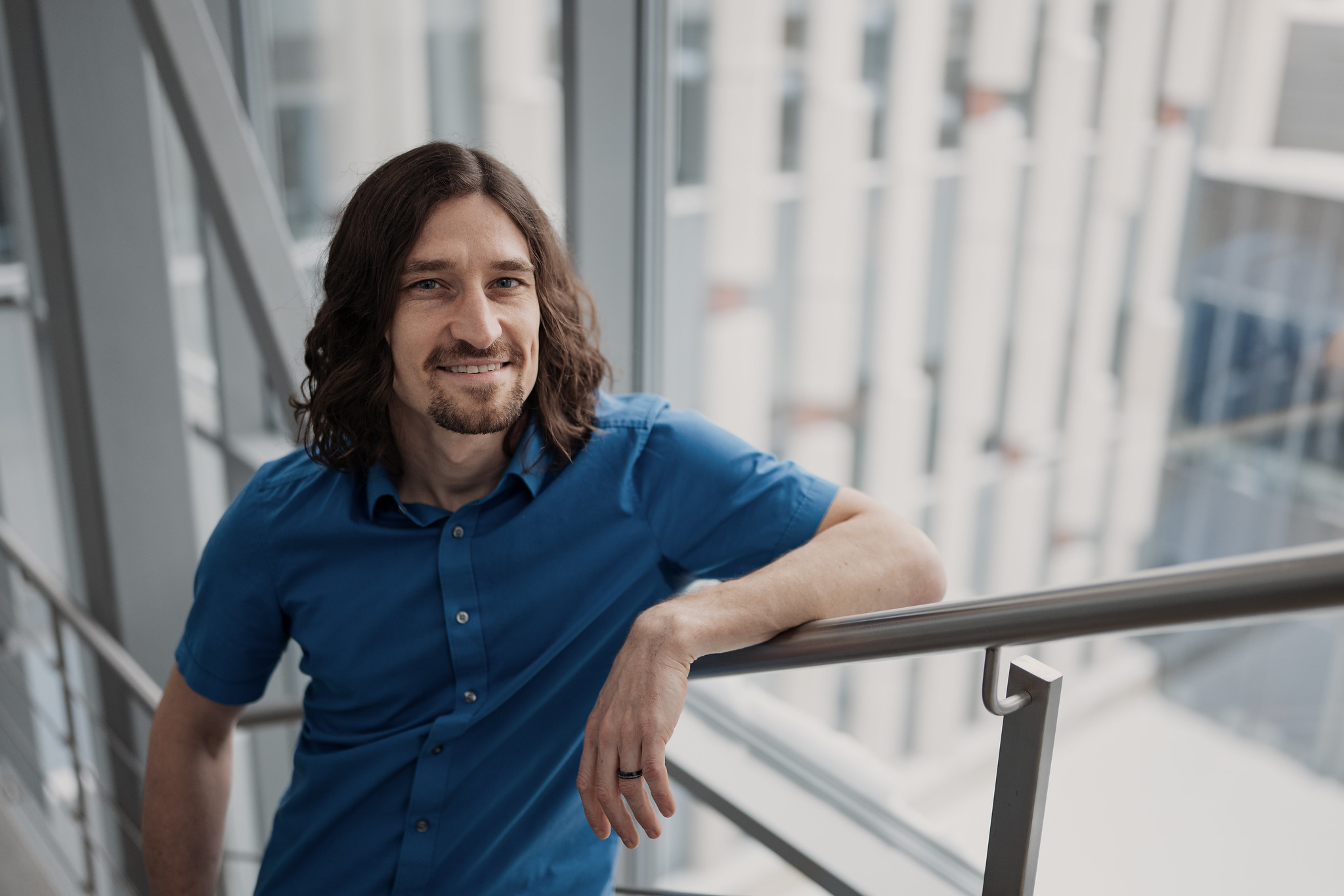
    52619672840 66b97899f7 kAlthough different grant cycles vary, in general, the process of applying for grants takes time. According to 2022 European Research Council (ERC) Starting grant winner Dr Stephen Knox Jones Jr, a biochemist at Vilnius University (VU) Life Sciences Center (LSC), it was six months before the application deadline when he started putting words on paper. However, the intellectual work began much earlier. Apart from timing, the researcher shares what other factors are essential in applying for grants.

    Receiving a grant as outside validation


    "If you want to make a big impact, you need the money to do it. That means applying for grants, which is not an easy process. It takes time. It takes effort. It takes a lot of planning. Getting this grant affirms that these efforts were worthwhile," – says Dr Jones, last year receiving the ERC Starting grant of 1.2 million Euros.


    It is not the first grant of this size that he applied for in his life. Before leaving his home country, the USA, Dr Jones applied for another grant he barely missed: “Many people would have said it was a huge waste of my time. However, everything I learnt in that process, I applied here. So indirectly, not getting the first grant helped me achieve another this time around. That is why I suggest thinking with a ‘long-term’ perspective.”
    Dr Stephen Jones earned his PhD degree from Brown University (Providence, RI, USA) and later joined Ilya Finkelstein's lab as a postdoc at the University of Texas (Austin, TX, USA). In 2021 he came to VU LSC’s new EMBL Partnership Institute to establish The Jones Laboratory; his team researches and develops novel genome editing tools. For the leader of the Jones!Lab, this was his last and only opportunity to apply for the ERC Starting grant, which is explicitly directed towards new research team leaders with less than seven years since receiving their PhD.


    "When you are still quite a young researcher and new to leading a team, it's helpful to have outside validation. You feel a lot of doubt in general, so having other people say you are doing it right is beneficial. Getting the grant is reassuring and motivating. The idea of funding put a lot of pressure on me, but I can breathe a little now," – says the ERC grantee.


    Getting as much criticism as possible


    Concerning the application timeline, the most important date is the submission deadline. Yet, there are several steps before the applicant gets a final answer almost a year later.
    "I started working on it in the summer of 2021, basically six months before submitting. However, that doesn't mean I hadn't been intellectually working on it before. But this was when I started first putting words on paper," – claims the leader of the Jones!lab.


    According to him, if you want to succeed with these things, you best get as much criticism as you can, as early as you can: "After writing the application, you need feedback from your peers. It’s tough if you haven't learned how to handle criticism. However, it is better to receive feedback from your colleagues when you can still make changes, than from the ERC committee when you can’t do a thing about it. So if an expert you trust says that your idea needs work or isn’t good enough, it is good to know – you can prepare another one instead."


    He suggests that sharing ideas with other people can get you an outside perspective and assure that you are communicating your ideas effectively, helping you develop your ideas further. Of course, it takes time. That is why Dr Jones planned time to build his concept twice. This is a good strategy, as one gets valuable feedback the first time around, enabling a better product the next time. The main goal is to get that information.


    "The minimum you need in this process is two people: yourself and a representative from a European university committed to hosting you. But the more people involved, the better. I had everyone from my institute and other close colleagues viewing my work, even people doing similar work in other parts of the world. And, of course, I lined up a team of experts tangential to my project. I asked if they could provide support if needed. So, a more realistic number would be 10 to 20 people," – tells the researcher.


    Convincing different audiences


    "After submitting the application in January, I didn't hear anything until the summer. Only then I received the first answer. In my case, they sent a positive letter, but I still had to wait for the interview in the fall."


    During the interview in September, Dr S. Jones had to present his project in just ten minutes, before answering his panel’s questions: "Here you have all these questions and comments from experts, and from other reviewers who are not experts in your field. It's worth realizing – this is a very broad audience. So, before the interview, I presented my work to people from all different levels of expertise to get feedback: from the top people in my field, those who are experts in other fields, students that just joined my lab, to people who have never heard of CRISPR".


    According to him, if you can explain your project to anyone, you truly know your thing. Finally, only in November did the researcher discover he had succeeded.


    Convince yourself and use the previous examples


    "The crucial thing during the process is trusting that you can do it. But you can't always get that from yourself, so you need a support structure telling you you’re worth it. It gives you the energy you need because it will be difficult," – assures the researcher.


    Since there is also a lot of planning and thinking involved, your support team – family, friends, colleagues – will help you make it through the whole process. Even so, one has to believe in himself (herself) too, because if you haven't convinced yourself, you are going to have a hard time convincing anybody else.


    "From a more practical perspective, I would advise: don't reinvent the wheel. Many others have made it through this process, so you need to get information from someone like me who has received the grant, or maybe from another colleague who has reviewed that type of application. The people from the research project division also help by sharing examples of prior ERC grants that have been funded and the information on everything you should know," – says Dr S. Jones.


    Last but not least, the applicant has to be ambitious: "You want to make sure that whatever you are proposing has a lot of potential for the community. If it can make a big impact, it opens you up to bring in some risk. People should see that the stuff that I do is worth doing".


    In 2022 Dr S. Jones and his team received a €1.2 million grant from the ERC. Spanning the next five years, the researcher will lead a project which aims to improve gene editing techniques.

  • Prof. M. Šimėnas Secures Prestigious European Grant to Enhance Sensitivity of Electron Paramagnetic Resonance by Thousand Times

    M. ŠimėnasThis year, a prestigious European Research Council (ERC) grant was awarded to Prof. Mantas Šimėnas, a researcher from the Institute of Applied Electrodynamics and Telecommunications at the Faculty of Physics (FP) of Vilnius University (VU). His team will use the EUR 2.5 million Starting Grant, allocated for five years, to increase the sensitivity of electron paramagnetic resonance (EPR) spectroscopy.


    According to Prof. Šimėnas, the aim of the winning project ‘Strongly Enhanced Sensitivity EPR through Bimodal Resonators and Quantum-Limited Amplifiers, Strong-ESPRESSO’ is to reduce the time required for EPR experiments by a factor of several thousand and to translate these improvements into the study of new systems: ‘EPR is a powerful tool used in a wide range of disciplines, including biology, chemistry, physics, materials science, and many others. It provides important and unique information about the material under study; however, the relatively low sensitivity of this method limits its use. For some critical materials, EPR studies can take up to a week, and, if even longer experiments are needed, we consider the system to be practically unmeasurable with EPR.’


    The sensitivity has already been increased, new target – 5,000 times


    In 2022, a Marie Skłodowska-Curie grant was awarded to the VU researcher, allowing the research team to improve the sensitivity of the EPR by a factor of several hundred. According to Prof. Šimėnas, the project is a natural but non-trivial extension, which is expected to shorten the time of EPR experiments by up to five thousand times.


    ‘Imagine that you used to spend a week measuring a protein system. Now, it would take about two minutes. This saves a huge amount of precious resources that can be used for even more research,’ says the scientist.


    He asserts that the ERC funding scheme is essential for its prestige and practical benefits: ‘This generous grant is one of the most favourable in Europe. It allows the researcher and their team to stop worrying about costs and concentrate on their research. Of course, there’s a long road beforehand in terms of developing the research concept, completing the application, and, ultimately, performing well in the competition. However, the institutional support at the University motivates me,’ the interlocutor says.


    Improvement can contribute to a better understanding of degenerative diseases


    ‘EPR is a spectroscopic research tool that allows us to study the spins of unpaired electrons. In nature, most electrons are paired, but there are some materials where the electron has no pair, i.e. its spin is not compensated. These so-called paramagnetic systems can be detected with EPR, providing beneficial, often unique information about the material under investigation – from proteins and catalysts to solid-state systems for quantum technologies,’ clarifies Prof. Šimėnas.
    The researcher goes on to explain that the advantage of EPR is its selectivity. Most other methods observe the collective response of all the atoms in the material, but EPR can only focus on the atom with the unpaired electron. This selectivity allows specific protein sites to be examined and thus determine the structure of the protein.


    ‘Alongside other studies, we will also look at proteins involved in forming various neurodegenerative diseases such as Alzheimer’s and Parkinson’s. Therefore, improvements in the sensitivity of EPR study methods will allow us to significantly extend these studies, including protein systems that EPR cannot currently study,’ explains Prof. Šimėnas.


    The project will also study new types of catalysts and various spin platforms for future quantum technologies.


    Quantum and other complex technologies


    ‘In this project, we intend to borrow and adapt tools from the field of quantum technologies. One of them is a quantum-limited microwave amplifier with the minimum possible noise, as quantum mechanical processes limit the noise of such amplifiers. In general, EPR studies are hampered by thermal noise, which significantly increases the duration of experiments. We want to use these sophisticated amplifiers to improve EPR’s sensitivity drastically,’ says Prof. Šimėnas.
    In this project, the researcher discusses his plan to use other sophisticated tools, such as a bimodal microwave resonator.


    ‘In EPR studies, we want to concentrate the microwaves where the sample is located – the microwave resonator does that. Conventional EPR resonators have a single mode – they resonate at a single frequency. Bimodal resonators have two modes: they may have the same frequency, but their fields are perpendicular in space, i.e. the two resonances do not interact. If we put a system of electron spins in such a resonator, it is through the spins that interaction is created between the two modes. In this way, we can use one mode to excite the spin system and the other to read the excitation of the spins, thereby isolating the detector from the loud thermal noise that comes with the excitation signal,’ Prof. Šimėnas says.


    ‘Among other innovations, we will use a millikelvin dilution refrigeration system to cool resonators and amplifiers. Millikelvin is close to the lowest possible temperature – almost absolute zero, at -273.15 °C. We will buy a special dilution fridge to reach these extreme temperatures. It will be the first in the region to open up a wide range of research and development opportunities for quantum technologies in Lithuania. It is great that our funding makes it possible to stop worrying about how and where to buy the sophisticated equipment needed for the research,’ says the VU researcher.


    This year, Prof Patrick Pausch, a researcher from the Life Sciences Center (LSC) at VU, also received an ERC Starting Grant in Lithuania. The only other ERC Starting Grant to have previously been awarded to a researcher in Lithuania was to Dr Stephen Knox Jones from the LSC at VU. The 2024 ERC Starting Grant competition attracted 3,500 researchers from European Union Member States and the countries associated with Horizon Europe, 494 of whom were awarded funding. The grant won by Prof. Šimėnas is the first ERC grant awarded to VU FP.


  • Prof. Patrick Pausch Leads ERC-Funded Research on Jumbo Phages at VU

    Patrick Pausch 1 1Prof. Patrick Pausch from the Life Sciences Centre—European Molecular Biology Laboratory (LSC-EMBL) partnership institute at Vilnius University (VU) has been awarded a prestigious European Research Council (ERC) Starting Grant of €1.5 million for his innovative research project "Jumbo Phages in Translational Enzyme Research" (JUPITER). Over the next five years, Prof. Pausch and his team at VU will explore jumbo phages—a class of large viruses that infect bacteria—by studying their uncharacterized genes and potential applications in biotechnology.


    Advancing Biotechnology


    Jumbo phages are viruses with genomes up to ten times larger than typical phages. Only recently has the diversity of jumbo phages been recognized, and much of the genetic content remains unexplored, considerably limiting the understanding of their biology and potential applications. The JUPITER project aims to bridge this gap by employing a novel high-throughput strategy to annotate the functions of unknown genes within jumbo phages.


    "This grant offers a unique opportunity to push the boundaries of what we know about jumbo phages. I believe it could lead to groundbreaking molecular tools and methods that may be biotechnologically valuable," said Prof. Pausch.
    Prof. Pausch's research is expected to provide new insights into how jumbo phages modulate genetic material and hijack the gene expression machinery of their bacterial hosts. By understanding these processes, the project aims to inspire new antimicrobials, particularly against drug-resistant bacteria, and to create innovative genome-editing tools with wide-ranging applications—from treating genetic diseases to improving agricultural crops.


    "Phages are remarkably skilled at taking control of bacterial cells," explained Prof. Pausch. "By studying underexplored genes, we hope to discover new mechanisms and functions that could lead to exciting applications in biotechnology."


    Expanding Phage Diversity for Future Discoveries


    The large genomes of jumbo phages contain many genes of unknown functions, potentially holding the key to major scientific advancements. "Jumbo phages are big viruses that attack bacteria, and understanding their genes at a large scale will help us to understand their biology in greater detail," said Prof. Pausch. He also noted that the term "jumbo" comes from the famous giant elephant named Jumbo, a name now used to describe other large things, such as jumbo jets.

    A key goal of the JUPITER project is to expand the known diversity of jumbo phages. This could accelerate scientific discovery by revealing a broader range of biological mechanisms. Prof. Pausch's collaborative work will include leading researchers from Vilnius University, Drs. Eugenijus Šimoliūnas and Darius Kazlauskas, and provide opportunities for both graduate and undergraduate students to participate, contributing to the development of future scientific talent.


    "Together with my team, we are planning to explore the environments of Lithuania to discover new phages and their host bacteria. I am particularly excited to sample previously overlooked environmental niches across the country."


    Lithuania and Vilnius University: A Growing Hub for Life Sciences


    Prof. Pausch's selection marks a significant achievement for Lithuania and VU. The ERC Starting Grant is one of Europe's most prestigious research funding opportunities, awarded to early-career researchers. For the 2024 ERC Starting Grants, 3500 applications were submitted, and only 495 were selected for funding after two selection rounds. These grants are awarded to researchers 2-7 years after the award of their Ph.D. degree.


    "Receiving an ERC Starting Grant is a unique opportunity since grants that fund 'high-risk, high-gain' research at such a scale are quite rare. To succeed in an ERC project, everything needs to align perfectly: the principal investigator, the team members and their institution. Securing another ERC grant further demonstrates that Vilnius University, its researchers, and Lithuania are at the forefront of European research." concluded Prof. Pausch.


    This year, two Vilnius University scholars became ERC grantees. Apart from Prof. P. Pausch, another Starting Grant was awarded to Prof. Mantas Šimėnas, working in the Faculty of Physics. Before then, Lithuania had only received one other ERC research grant for early-career researchers in 2022 by Prof. Stephen Knox Jones from Vilnius University, LSC-EMBL.


  • VU Researchers Prof. M. Šimėnas and Prof. P. Pausch Awarded ERC Funding Worth Millions

    52676440364 3ca87e90e7 kThe European Research Council (ERC) has announced the award of Starting Grants to the most talented early-career researchers. The prestigious funding has been awarded to two representatives of Vilnius University (VU) –Dr Patrick Pausch, a Research Professor from the Life Sciences Center European Molecular Biology Laboratory Partnership Institute (LSC-EMBL, PI), and Dr Mantas Šimėnas, Professor from the Faculty of Physics (FP).


    The research group led by Prof. Šimėnas has been awarded EUR 2.5 million over five years for the innovative project ‘Strongly Enhanced Sensitivity EPR through Bimodal Resonators and Quantum-Limited Amplifiers(Strong-ESPRESSO)’.


    Šimėnas’s research aims to reduce the time required for EPR experiments by a factor of several thousand and to translate these improvements into the study of new systems. The researcher had previously been awarded a Marie Skłodowska-Curie Postdoctoral Fellowships grant, which allowed him to improve the sensitivity of the EPR tool several hundred times.


    The EUR 1.5 million grant will enable the research team led by Prof. Pausch to implement the ground-breaking research pro ject ‘Jumbo Phages in Translational Enzyme Research’ (JUPITER). Over the next five years, the researcher and his team from the LSC-EMBL PI at VU will study jumbo phages – a class of large, bacteria-infecting viruses. The team will analyse their uncharacterised genes and potential applications in biotechnology.


    In 2022, Prof. P. Pausch became one of the recipients of the European Molecular Biology Organisation (EMBO) Installation Grant. The ERC Funding will allow him to continue his innovative work.


    The total amount of ERC Starting Grants awarded is EUR 780 million. The funding, which a total of 3,500 candidates competed for, is allocated to 494 researchers for five years. To date, the only ERC Starting Grant in Lithuania has been awarded to Dr Stephen Knox Jones, a researcher from the LSC at VU.

Browse the updated Vilnius University website at www.vu.lt/en