MSCA PF

  • ERA Fellow Dr Alfredo Hernández Sánchez’s Research on FinTech Regulatory Sandbox Development in Europe (FIRSA)

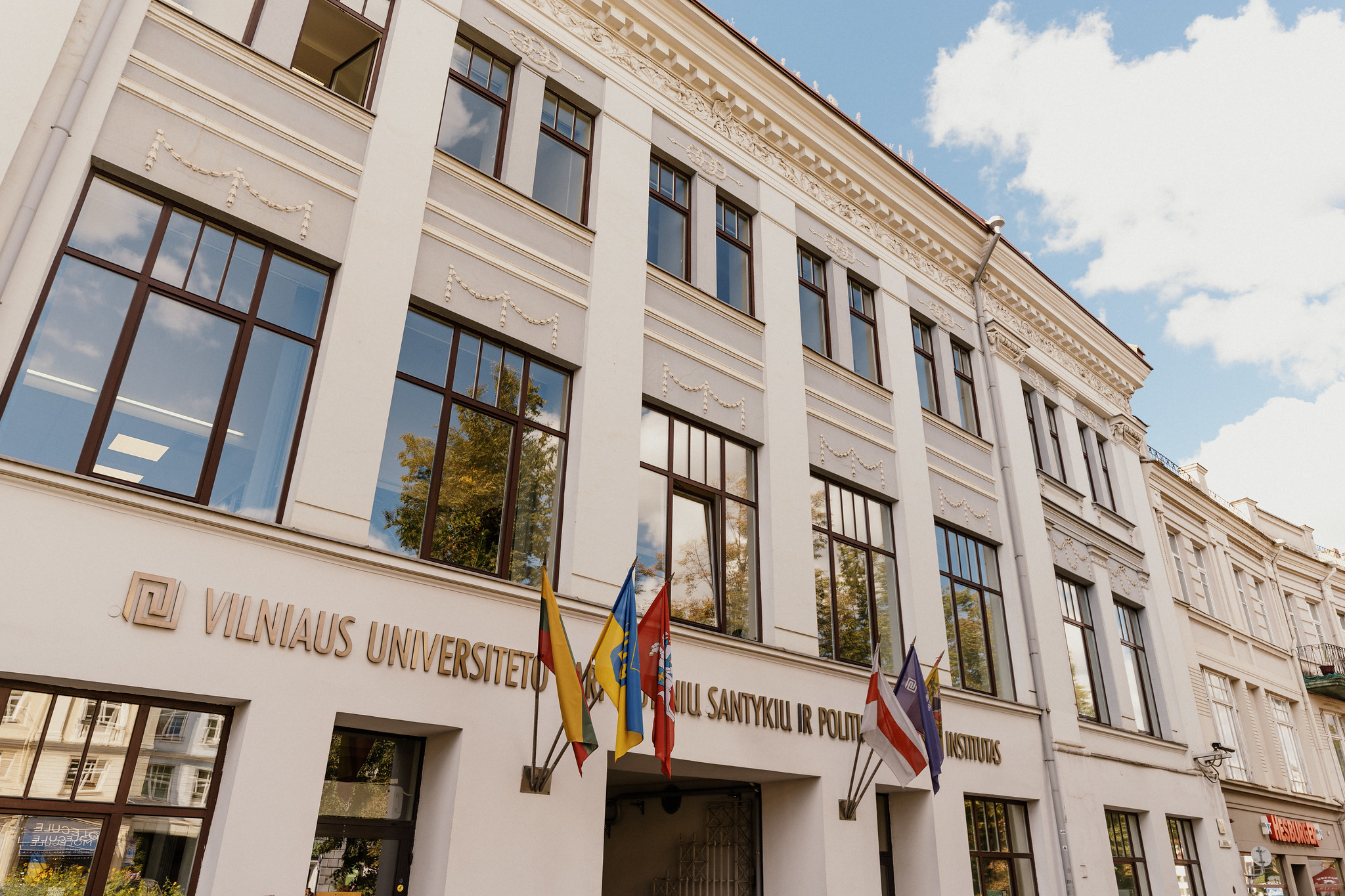
    52676448514 74d810435c kGreat news reached Vilnius University (VU) Institute of International Relations and Political Science (IIRPS) earlier this year. A Central European University political scientist Dr Alfredo Hernández Sánchez (supervisor Assoc. Prof. Dr Vytautas Kuokštis) was awarded an ERA Fellowship under Horizon Europe to implement a project on the development of FinTech regulatory systems in Europe.

    The growth and spread of FinTech have created complex challenges that have placed a significant burden on current regulatory frameworks. In response to the need to balance the promotion of innovation with the maintenance of financial stability and the protection of consumers, one institutional innovation – the FinTech regulatory sandbox (FRSB) – has gained traction to meet these challenges. However, the trajectories of adoption and the level of development of FRSBS vary significantly among EU countries in ways that remain underexplored. The FIRSA project aims to fill this gap by offering a multidimensional measurement framework of FRSBS in the EU to develop a greater understanding of their differences, relative strengths and weaknesses, and the mechanisms that lead to their implementation.

    “We are very grateful for the grant that we received; for us, it is, first, an acknowledgement of our project’s importance. The subject matter – FinTech political economy and regulatory innovation framework are important and, so far, insufficiently researched. We hope that this research project will help uncover differences in the application of these platforms in different countries, but also grant scientific and practical insights into this topic” – Academic advisor Assoc. Prof. Dr V. Kuokštis says.

    We talked with Dr A. Hernández Sánchez about his project, “FIRSA,” the first results, challenges, and the motivation behind the research topic.

    What is the project about?

    The research part aims to understand regulatory sandboxes in fintech, specifically in the EU. These regulatory sandboxes are regulatory innovations in which firms want to test out new financial services that involve the use of new technologies such as AI or big data. Now, the reason behind the regulatory sandbox, or at least this is the stated goal, is to regulate these technologies without stifling innovation. So, the goal is for financial systems to become more efficient and more innovative without endangering the privacy of individuals or creating financial risks in the system.

    The goal of the project is to learn, first, the differences in approaches with sandboxes in Europe and why some countries implement them and others don’t. Within the group that implements these sandboxes, we aim to find how they are being organized and why they are being organized. This is stage one. The second part is getting a sense of what policy lessons we can learn from the experience of the implementation of the sandboxes so far. Which are working better than others, are they being applied in uniform ways, and what are the markers of success?

    Alfredo Sanchez foto 1024x1024

    What made you choose this research topic?

    Inspiration came from VU IIRPSs Assoc. Prof. Dr V. Kuokštis's research about FinTech political economy. Before this, I was doing corruption studies to measure corruption across different sectors. This project allowed me to come back to financial systems analysis, which I always enjoyed doing.

    What are the first results of this research?

    At the moment, we are working on a paper on why countries over all decide to develop FinTech sandboxes. What are the things that predict whether a country will develop the sandbox? The greatest prediction of this possibility is the level of e-government services. Now this tells us that if the governments are more concerned with innovation or something that falls more in the realm of innovation, they are more likely to develop a regulatory system rather than the ones interested in financial stability. It is also likely that countries with regulatory sandboxes are more motivated by innovation in the public sector rather than specific financial goals.

    How do you think your research will impact science and practical applications?

    I think the benefits are twofold. On the one hand, it will give science more insight into how these regulatory platforms work in different countries, which practices are working, and which are perhaps not working as expected. Today, we do not yet have enough data on how they work—whether they are just theoretical solutions or whether they help companies experiment and innovate. This study will help us understand the logic behind these platforms in a more systematic way.

    On the other hand, in practice, these insights can be of great value to policy makers, who could use the study's results to improve existing regulatory platforms or develop new ones. This is relevant not only for the financial sector but also for broader mechanisms to stimulate innovation and to ensure a balance between regulatory requirements and the space for creative ideas.

    What advice would you give to young researchers interested in applying for a grant?

    In my case, VU TSPMI provided a lot of support in preparing my application, which was one of the main reasons for my success. The grant not only funds the project but also gives me the opportunity to establish meaningful partnerships and develop my research. I think my main advice to other young researchers would be to establish a strong working relationship with the institution you want to work for. When the project is strong, and the team is professional, the chances of success increase.

    The interview is part of a project that has received funding from the European Union under the WIDERA programme (FIRSA project, Grant Agreement No. 101180601). Views and opinions expressed are, however, those of the author(s) only and do not necessarily reflect those of the European Union or the European Research Executive Agency. Neither the European Union nor the granting authority can be held responsible for them.


  • European Commission Grants Awarded to Four Researchers For Their Postdoctoral Fellowships at Vilnius University

    52288501502 1da33fc76e kThe results of the 2023 call for proposals for Marie Skłodowska-Curie Actions Postdoctoral Fellowships (MSCA PF) under Horizon Europe, the European Union’s framework programme for research and innovation, reveal that two MSCA PF grants have been awarded to Vilnius University (VU) applicants. Two other researchers who submitted their proposals with VU have succeeded in the ERA Fellowships action.

    Dr. Patryk Michał Ryczkowski, who will pursue his postdoctoral fellowship at the VU Faculty of Philology, is one of the researchers who was awarded the MSCA PF grant. His innovative project is titled ‘Catholic Inculturation of the Uniate Church: Basilian hagiography of the 17th and 18th centuries (BasInCult)’. Dr Ryczkowski’s fellowship is supervised by Assoc. Prof. Mintautas Čiurinskas.

    Patryk M Ryczkowski

    Dr. Patryk Michał Ryczkowski

    ‘The purpose of this work is to identify the literary strategies used by the Uniates from Orthodox backgrounds to consolidate their position within the cultural and theological system of Roman Catholicism,’ says Dr Ryczkowski. He will investigate the process of the local unification of the two early branches of modern Christianity that gave rise to the present Greek Catholic (Uniate) Church. The project focuses on Basilian monks of the Polish-Lithuanian Commonwealth and the Basilian centre in Vilnius, with the aim of researching the hagiographic literature, its authors, and the Uniate models of holiness. 

    Dr. Miglė Gabrielaitė, who will implement her project titled ‘Genomic Exploration—Mapping the Spread, Evolution, and Adaptation of an Emerging bacterial pathogen—Achromobacter (GEM-SEE-Achro)’ at the Life Sciences Center of VU, has also been awarded funding. Her fellowship is supervised by Dr Gytis Dudas.

    Miglė Gabrielaitė

    Dr. Miglė Gabrielaitė

    ‘Bacteria of the genus Achromobacter are environmental germs that are highly resistant to antibiotics and can cause healthcare-associated infections. Within the scope of this MSCA project, we will analyse over 800 Achromobacter genomes, seeking to understand how these bacteria are transmitted, how they evolve and adapt to reproduce in humans, as well as how antibiotic resistance is acquired. We hope to apply our findings to other groups of bacteria in order to improve the treatment strategies for various bacterial infections,’ explains Dr. Gabrielaitė.

    The postdoctoral fellowships of the two other researchers who have submitted their proposals with VU will be funded by the ERA Fellowships. The projects submitted with institutions from the so-called widening countries that were excellently rated during the MSCA PF action yet not funded due to budget constraints of the call have been automatically included in the action.

    Dr. Alfredo Hernández Sánchez will implement his project titled ‘Understanding FinTech Regulatory Sandbox Development in Europe (FIRSA)’ at the Institute of International Relations and Political Science of VU and will be supervised by Assoc. Prof. Dr Vytautas Kuokštis.

    Alfredo H Sanchez

    Dr. Alfredo Hernández Sánchez

    According to Dr. Hernández Sánchez, the growth and development of the FinTech sector has brought significant challenges that have become a heavy burden on the existing regulatory framework. In response to the need to tie the promotion of innovation with the maintenance of financial stability and consumer protection, the FinTech regulatory sandbox (FRSB) has emerged as an innovation to combat these challenges. However, while the trajectories and levels of FRSB development vary considerably across the EU, the underlying causes are still not sufficiently explored. The project aims to fill the existing gap by proposing a multidimensional framework for the evaluation of FRSB within the EU, allowing for a better understanding of their differences, relative advantages and disadvantages, as well as application mechanisms.

    Dr. Giulia Lausi will build her competencies at the VU Faculty of Law by implementing her project titled ‘Investigating Gender-Based Discrimination: Unveiling the Underlying Mechanisms (UnveilGBD)’. Her fellowship is supervised by Assoc. Prof. Dr Ilona Michailovič.

    Giulia Lausi

    Dr. Giulia Lausi

    Dr. Lausi intends to investigate the interconnections between cognitive functions, sexist beliefs, and the gender stereotypes that contribute to gender discrimination. By analysing these dynamics at the societal, community, and individual levels, the researcher will aim to develop a comprehensive model to be used in international policies for preventing gender-based violence.

    The European Commission will fund a total of 1249 MSCA PF projects by the most talented young researchers and 50 ERA Fellowships projects.

  • MSCA Grantee Dr. Giulia Lausi: Investigating Gender Bias Dynamics

    lausiIn a significant achievement, Vilnius University's Law Faculty secured funding for the postdoctoral fellowship project “Investigating Gender-Based Discrimination: Unveiling the Underlying Mechanisms (UnveilGBD)”. Led by Dr Giulia Lausi from the University of Rome Sapienza, and supervised by Assoc. Prof. Dr Ilona Michailovič, this project delves into the complex dynamics of gender bias.


    Funded under the prestigious Marie Skłodowska-Curie Actions (MSCA) Postdoctoral Fellowships (PF) , this initiative aims to unravel the interplay between cognitive functions, sexist beliefs, and gender stereotypes contributing to discrimination. Through interdisciplinary analysis, Dr Lausi seeks to develop a model informing international policies to prevent gender-based violence.

    Assoc. Prof. Dr I. Michailovič is delighted with G. Lausi's win and thinks that everything is important in this project – an interdisciplinary comprehensive approach to the study of gender discrimination, and a synthesis of psychology, victimology and criminal justice in the context of the problem under consideration. She is sure that Dr G. Lausi's project will make a significant contribution not only to raising awareness of gender discrimination, but also to finding effective mechanisms to prevent it.


    Dr. G. Lausi explained how she prepared the project and how she felt when she found out about the results.


    How did you feel when you found out that you‘ve received a grant for your project?

    I was stunned. I knew that this was something hard to achieve, so I didn‘t expect to win. Of course, I knew, that I had a good project, but I didn‘t think it was good enough to compete with such amazing experts that win these awards.
    It was 6 AM when I checked my email and found the letter, announcing that I won, and I woke up my entire family by screaming out of joy. It was amazing – I can say with confidence that this was my biggest accomplishment ever.


    And what is the process like of getting a grant? Was it difficult?

    I have always liked doing research, so I think that coming up with the idea for the project was the easiest part for me. Then came the practical aspects, like for example – how to write it all down concisely and how to get funding. I had never written a project like that before – the only time I had to present something of this sort was my PhD project, and then I was constantly under the guidance of my supervisor.


    I would say the writing part was the most difficult, and convincing people that I‘m the best candidate for such funding. I learned a lot throughout this process, for instance – I had never really thought about the economic impact of gender-based violence before writing this project. It turned out to be an important aspect of the 2030 EU agenda. So, to answer your question, I think the hardest part was having to read a lot of papers on things I didn‘t previously know about.


    Can you describe more in-depth what your project is about?

    The project is called “Investigating Gender-Based Discrimination: Unveiling the Underlying Mechanisms (UnveilGBD)”, so the idea behind it is to develop research to find out what factors are mostly at fault for the persistence of discrimination against women. Some cultural aspects of misogyny vary between different countries, but some things are more worldwide. The goal is to investigate the reasons for these phenomena.


    Your supervisor is Assoc. Prof. Dr Ilona Michailovič, who specialises in legal science, and your science field is psychology. How did you decide to choose a legal expert as a supervisor? How do you think what advantage this interdisciplinary approach can bring to your research?

    I chose Assoc. Prof. Dr Ilona Michailovič as my supervisor because despite my background in psychology, my research in forensic psychology has already integrated legal aspects. Moreover, since my research focuses on gender-based violence, which spans multiple disciplines, having a supervisor from a legal background enriches the interdisciplinary nature of my work. Assoc. Prof. Dr I. Michailovič's expertise in legal science is particularly beneficial for developing effective policies and guidelines, ensuring a more realistic and practical approach to addressing gender-based violence.


    When did you first become interested in the topic of gender-based discrimination?G. Lausi

    Whenever people ask me this, I always say that I‘ve always been interested in it; I just wasn‘t aware of it because gender-based discrimination is so ingrained in my everyday life since I‘m a woman myself. I even thought about writing a thesis on this topic at the end of my Master‘s degree, but I ended up writing it on the topic of cyber crimes against women, which is also closely related. While working on this topic I learned about phenomena that I didn‘t even know had a name. So I‘ve been studying gender-based violence since 2017.


    Can you give an example of such phenomena that you learned about while writing your first thesis?

    Mainly it was about online hate speech. It helped me understand that an aggressive comment isn‘t always just a comment – it‘s often aggressive just because the recipient is a woman, which makes it a gender-based hate crime. Also, most women have experienced catcalling, and we often chalk it up to something that just happens, but while writing this thesis, I understood that it‘s also a form of violence.


    Lastly, what advice would you give to other young researchers who might want to apply for a grant?

    I think it‘s really important to have someone who will be with you throughout the process and support you because having a support system helps tremendously. My supervisor guided me with a lot of care and I think I wouldn‘t have been able to develop a project in such a short time without her help. My second piece of advice would be – just try. Sometimes we underestimate our abilities and think that we won‘t be able to achieve something, so we don‘t even try. You might surprise yourself.

Browse the updated Vilnius University website at www.vu.lt/en